
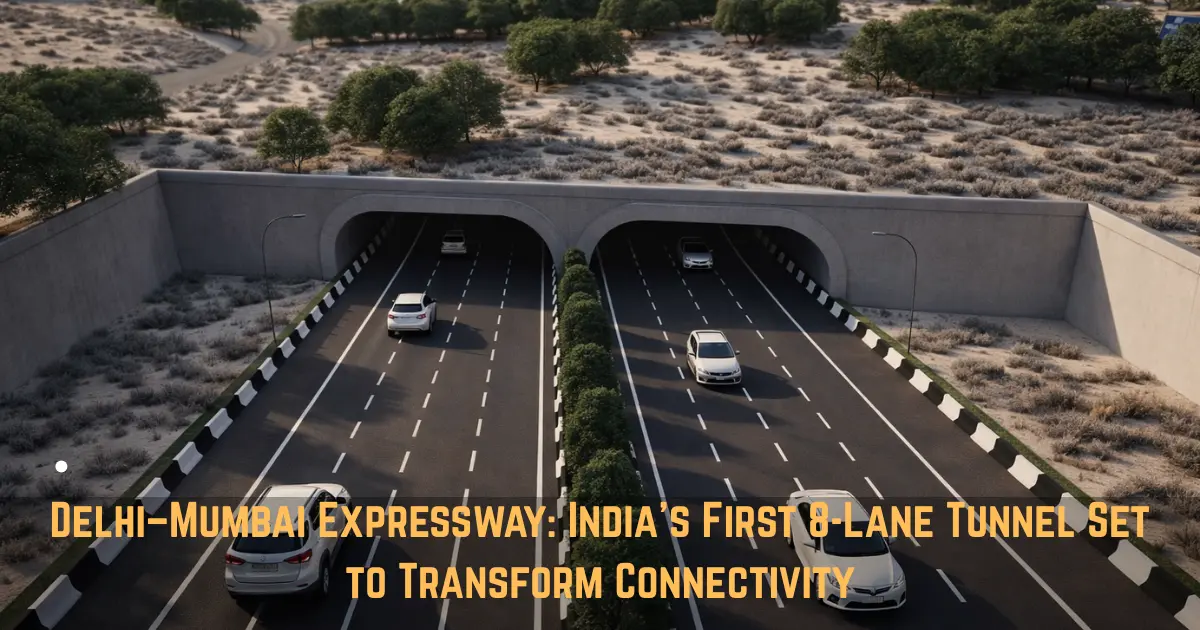
India’s infrastructure development is reaching new heights with the near completion of a landmark tunnel on the Delhi–Mumbai Expressway. This upcoming 8-lane tunnel, passing beneath the Mukundra Hills Tiger Reserve, is a major milestone in modern engineering and sustainable development.
Key Highlights of the Tunnel
The tunnel is approximately 4.5–5 kilometers long and has been designed using a double-tube structure. Each tube will carry 4 lanes, making it India’s first tunnel with a total of 8 lanes.
What makes this project unique is its alignment beneath a protected forest area. The design ensures that the natural habitat above remains undisturbed, allowing wildlife to move freely without interference.
Faster & Smoother Travel
Once operational, the tunnel will significantly improve travel efficiency:
-
Travel time between Delhi and Mumbai is expected to reduce drastically
-
Long-distance journeys will become faster and more comfortable
-
Traffic congestion on existing routes will decrease
The expressway is being developed for high-speed travel, enabling smoother and safer movement of vehicles.
Importance of the Expressway
The Delhi–Mumbai Expressway spans around 1,300+ kilometers and connects two of India’s biggest economic hubs. It is expected to:
-
Boost industrial and commercial growth
-
Reduce logistics costs
-
Improve connectivity across multiple states
Conclusion
The 8-lane tunnel on the Delhi–Mumbai Expressway is more than just an engineering achievement—it represents India’s vision for faster, smarter, and greener infrastructure. As it becomes operational, it will not only redefine travel but also unlock new economic and investment opportunities across regions.